- Noida, India, 201301
- +91 7303012305
When people think about Jammu and Kashmir, they usually imagine snow-covered mountains, mesmerizing valleys, serene lakes, and breathtaking landscapes. But beyond its natural beauty, the region is also famous for its vibrant culture, ancient traditions, and colorful festivals that bring people together throughout the year. From Buddhist celebrations in Ladakh to spiritual yatras in Kashmir and cultural fairs in Jammu, every festival reflects the rich heritage and spiritual essence of the region.
Table of Contents
ToggleThe festivals in Jammu and Kashmir are not just events; they are a reflection of history, faith, art, music, dance, and community bonding. Whether you are a traveler seeking cultural experiences or someone planning a Kashmir trip, attending these festivals can make your journey unforgettable.
In this complete guide, we will explore the most famous festivals in Jammu and Kashmir, their significance, celebrations, best time to visit, and why they attract thousands of tourists from across the world.
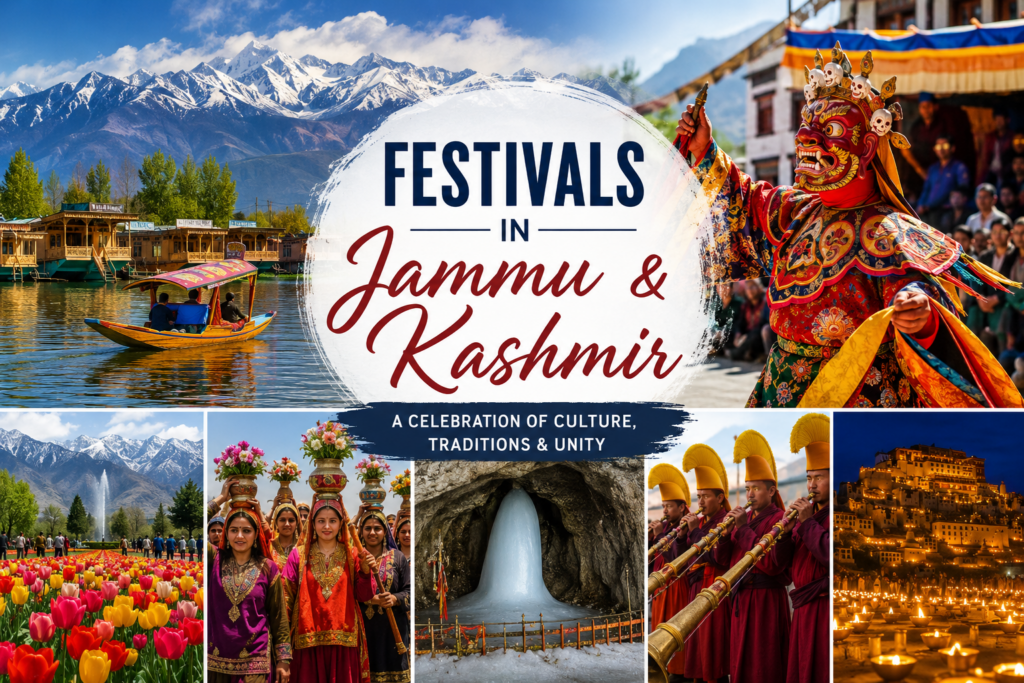
The cultural diversity of Jammu and Kashmir makes its festivals truly unique. The region is home to multiple religions and ethnic communities including Kashmiri Muslims, Hindus, Buddhists, and Sikhs. Because of this diversity, the festivals celebrated here are a beautiful blend of spirituality, tradition, music, dance, and local customs.
Some festivals are celebrated with grand processions and traditional performances, while others are deeply spiritual and attract pilgrims from all over India. During these celebrations, the valleys and monasteries come alive with colors, local cuisines, folk music, and traditional attire.
For travelers, attending these festivals offers an opportunity to experience the real culture of Kashmir and Ladakh beyond sightseeing.
One of the most famous festivals in Kashmir is the Tulip Festival. Held every year during spring in Srinagar, this festival celebrates the blooming of millions of tulips in Asia’s largest tulip garden.
The festival takes place at the beautiful Indira Gandhi Memorial Tulip Garden, located near Dal Lake. During the festival, tourists witness thousands of colorful tulips spread across the garden against the stunning backdrop of the Zabarwan Hills.
The Tulip Festival usually begins in March or April and attracts photographers, nature lovers, honeymoon couples, and travel enthusiasts from around the world.
Highlights of Tulip Festival
The festival is also one of the best times to visit Kashmir because the valley looks fresh, colorful, and vibrant after winter.
The Hemis Festival is one of the biggest and most popular Buddhist festivals celebrated in Ladakh. Organized at the famous Hemis Monastery, this festival honors Guru Padmasambhava, who is believed to be the founder of Tibetan Buddhism.
The festival generally takes place during June or July and lasts for two days. Thousands of monks and tourists gather to witness the famous masked dance performances known as Cham Dance.
During the festival, monks wear colorful silk costumes and masks representing various deities and spiritual figures. The performances symbolize the victory of good over evil and create a magical spiritual atmosphere.
Major Attractions of Hemis Festival
The Hemis Festival provides travelers with a deep insight into the spiritual traditions and Buddhist culture of Ladakh.
The Losar Festival marks the Tibetan New Year and is one of the most celebrated festivals in Ladakh. The festival usually falls between December and February depending on the Tibetan calendar.
Losar is celebrated with immense joy and enthusiasm. Homes are cleaned and decorated to welcome prosperity and positivity for the coming year. Families gather together for traditional meals, prayers, and celebrations.
Monasteries organize religious rituals, masked dances, and cultural performances during the festival. Locals wear traditional dresses and exchange greetings and gifts.
Key Highlights of Losar Festival
Tourists visiting Ladakh during Losar can experience the warmth, hospitality, and ancient traditions of the local people.
The Amarnath Yatra is one of the holiest Hindu pilgrimages in India. Every year, thousands of devotees undertake this spiritual journey to seek blessings from Lord Shiva at the sacred Amarnath Cave.
The cave houses a naturally formed ice Shivling, which is considered highly sacred among Hindus. The pilgrimage generally takes place during July and August.
Pilgrims trek through difficult mountainous terrain, snow-covered paths, and high-altitude routes to reach the holy cave. Despite the challenging conditions, the journey is filled with devotion, faith, and spiritual energy.
Importance of Amarnath Yatra
The Amarnath Yatra also contributes significantly to tourism and the local economy of Jammu and Kashmir.
The Ladakh Festival is a grand cultural event organized to promote the heritage and traditions of Ladakh. The festival generally takes place in September and attracts tourists from across the globe.
The week-long celebration includes colorful processions, traditional dances, music performances, archery competitions, polo matches, and local handicraft exhibitions.
People dressed in traditional Ladakhi attire participate in cultural parades through the streets of Leh, creating a vibrant and festive atmosphere.
Main Attractions of Ladakh Festival
This festival is perfect for travelers who want to experience the authentic lifestyle and traditions of Ladakh.
The Sindhu Darshan Festival is celebrated in honor of the sacred Indus River, also known as the Sindhu River. The festival is held every year in Leh during June on the occasion of Guru Purnima.
People from different states of India bring water from their local rivers and pour it into the Indus River as a symbol of national unity and cultural harmony.
The celebration includes traditional music, dance performances, prayer ceremonies, and cultural programs representing different parts of India.
Highlights of Sindhu Darshan Festival
The festival beautifully showcases the spirit of unity in diversity.
The Galdan Namchot is celebrated to honor the birth anniversary of Je Tsongkhapa, the founder of the Gelug school of Tibetan Buddhism.
The festival usually takes place in December when Ladakh is covered in snow. Monasteries, homes, and public places are illuminated with butter lamps and decorative lights, creating a magical atmosphere.
Monks perform religious ceremonies and prayers, while locals celebrate with traditional food and cultural programs.
Attractions of Galdan Namchot
The festival marks the beginning of the New Year celebrations in Ladakh.
The Matho Nagrang Festival is one of the most unique festivals in Jammu and Kashmir. Celebrated at the Matho Monastery, this festival is famous for its oracle monks.
The highlight of the celebration is when selected monks enter a spiritual trance and make predictions about the future. These monks perform daring acts and rituals while blindfolded.
Traditional dances, music, and prayers add to the spiritual and cultural significance of the festival.
Key Highlights
This fascinating festival attracts travelers interested in spirituality and Tibetan traditions.
The Spituk Gustor Festival is celebrated at the famous Spituk Monastery. The festival is known for its sacred rituals and dramatic Cham dance performances.
Monks dressed in elaborate costumes and masks perform traditional dances symbolizing the victory of good over evil forces.
The festival also includes prayer ceremonies, local gatherings, and cultural performances that attract both pilgrims and tourists.
Main Attractions
The spiritual atmosphere of the festival creates a memorable experience for visitors.
The ideal time depends on the type of festivals you want to attend.
| Festival | Best Time |
|---|---|
| Tulip Festival | March – April |
| Hemis Festival | June – July |
| Losar Festival | December – February |
| Amarnath Yatra | July – August |
| Ladakh Festival | September |
| Sindhu Darshan Festival | June |
| Galdan Namchot | December |
| Matho Nagrang Festival | February – March |
| Spituk Gustor Festival | January |
Spring and summer are considered the best seasons to explore Kashmir and Ladakh because of pleasant weather and vibrant celebrations.
Festivals in Jammu and Kashmir offer much more than entertainment. They allow visitors to:
Every festival brings together history, spirituality, art, and celebration in a way that creates unforgettable memories for travelers.
If you are planning to attend festivals in Jammu and Kashmir, keep these tips in mind:
Plan Early
Festival seasons attract huge crowds, so hotel and transport bookings should be made in advance.
Carry Warm Clothes
Even during summer, regions like Ladakh can get cold at night.
Respect Local Traditions
Many festivals are religious and spiritual in nature, so respectful behavior is important.
Try Local Food
Do not miss authentic dishes like Rogan Josh, Kahwa, Momos, Thukpa, and Kashmiri Wazwan.
Hire Local Guides
Local guides can help you understand the cultural significance of festivals and traditions.
The festivals in Jammu and Kashmir are a true reflection of the region’s cultural richness, spiritual depth, and natural beauty. From the colorful Tulip Festival in Srinagar to the spiritual celebrations of Ladakh and the sacred Amarnath Yatra, every festival offers a unique experience for travelers.
Whether you are looking for spirituality, adventure, photography, or cultural exploration, these festivals allow you to witness the soul of Kashmir and Ladakh in the most authentic way possible.
If you truly want to experience the beauty of Jammu and Kashmir beyond its mountains and valleys, then attending these incredible festivals should definitely be on your travel bucket list.
The Tulip Festival is one of the most famous festivals in Jammu and Kashmir. It attracts thousands of tourists every year because of the breathtaking tulip gardens, cultural events, and spring beauty of Kashmir.
The Tulip Festival is usually celebrated during March and April when the tulips bloom in full beauty at the Indira Gandhi Memorial Tulip Garden.
The Hemis Festival and Ladakh Festival are among the most famous festivals in Ladakh. These festivals showcase Buddhist culture, traditional dances, music, and local customs.
The Hemis Festival is known for its traditional masked dances called Cham dances performed by Buddhist monks at the Hemis Monastery. The festival celebrates the birth anniversary of Guru Padmasambhava.
The best time to visit depends on the festival you want to attend. Spring and summer, especially from March to September, are ideal for most cultural festivals and sightseeing in Kashmir and Ladakh.
The Amarnath Yatra is famous because it is one of the holiest Hindu pilgrimages dedicated to Lord Shiva. Pilgrims visit the sacred Amarnath Cave to witness the naturally formed ice Shivling.
The Losar Festival marks the Tibetan New Year and is celebrated with prayers, traditional dances, cultural performances, and family gatherings.
Yes, major festivals in Jammu and Kashmir are generally safe for tourists. Travelers are advised to follow local guidelines, respect traditions, and book accommodations in advance during festival seasons.
Tourists can enjoy folk music, traditional dances, local cuisine, handicrafts, spiritual rituals, cultural performances, and interactions with local communities during festivals in Kashmir and Ladakh.
The Ladakh Festival is considered one of the biggest cultural festivals in Ladakh as it showcases the region’s traditions, folk performances, sports, and heritage.
The Sindhu Darshan Festival is celebrated to honor the sacred Indus River and promote cultural unity among different communities in India.
Festivals in Jammu and Kashmir offer a unique opportunity to experience the region’s rich culture, spiritual heritage, traditional lifestyle, and vibrant celebrations while exploring its stunning natural beauty.